
From Burnt Sugar to Family Tradition
The first time I tried to make caramel, I burned it. The second time too. In my early twenties, I had a habit of picking recipes that looked simple on paper but never quite behaved the same in my kitchen. Every batch ended with a smoky room, a sticky spoon, and that smell of sugar gone too far.
Still, I couldn’t let it go. There was something about the color — the way sugar went from clear to gold to deep amber, almost alive. One evening, I read an article in a cooking magazine that described caramel differently. It wasn’t about perfection or precision, it said — it was about rhythm. About patience, scent, and knowing when to trust your eyes more than your timer. I tore that page out and tucked it away, waiting for the right moment to try again.
When I finally did, it was just before Valentine’s Day. I wanted to make dessert for my boyfriend — who’s now my husband. Feeding people has always been one of the ways I show love, even back then. I remember the hum of the stove and the way my nerves felt louder than the bubbling sugar. The sugar clumped, then slowly began to melt. I stirred, half afraid I’d ruin it again, but this time something was different. The smell changed — buttery, warm, right.
I pulled it from the heat, added the butter, and watched it roar to life. Then came the cream — bubbling and hissing — until it smoothed out into the glossy caramel I’d been chasing for years. When it cooled, I poured it into a jar, tied a ribbon around the lid, and served it over brownies that night.
That first true success — the Salted Caramel Sauce — wasn’t just a recipe that worked. It felt like alchemy. Sweet and rich, but somehow deeper than sugar and butter had any right to be.
Years later, when our oldest turned four, I brought the caramel back for his Polar Express–themed birthday party. I thought homemade jars of caramel would make the perfect favors — something cozy and personal. By then, I’d learned to trust the process: the color, the scent, the sound. The jars lined up on the counter, each tied with twine, looked like bottled gold.
After that came Vanilla Bean, then Chocolate, and finally, the happy accident — Butterscotch, born from the day I ran out of raw sugar and reached for brown instead.
These days, the caramel pot comes out a few times each season. My kids are taller now, old enough to reach the counter, curious enough to want to help. I only recently started letting them — now that they understand how hot sugar can be. They take turns stirring while I hover nearby, reminding them that caramel is part science, part patience, and a little bit of magic.
This time of year, the kitchen feels different — slower, softer, filled with the scent of sugar just beginning to turn golden. These caramel sauces have become a small winter ritual for us — stirred on quiet mornings, poured into jars for gifting, spooned over warm desserts when the evenings come early. Each one carries that little bit of warmth we all crave once the cold settles in.
🍮 The Caramels
Over time, our kitchen experiments became a small collection — each one with its own flavor, story, and half-page recipe card:
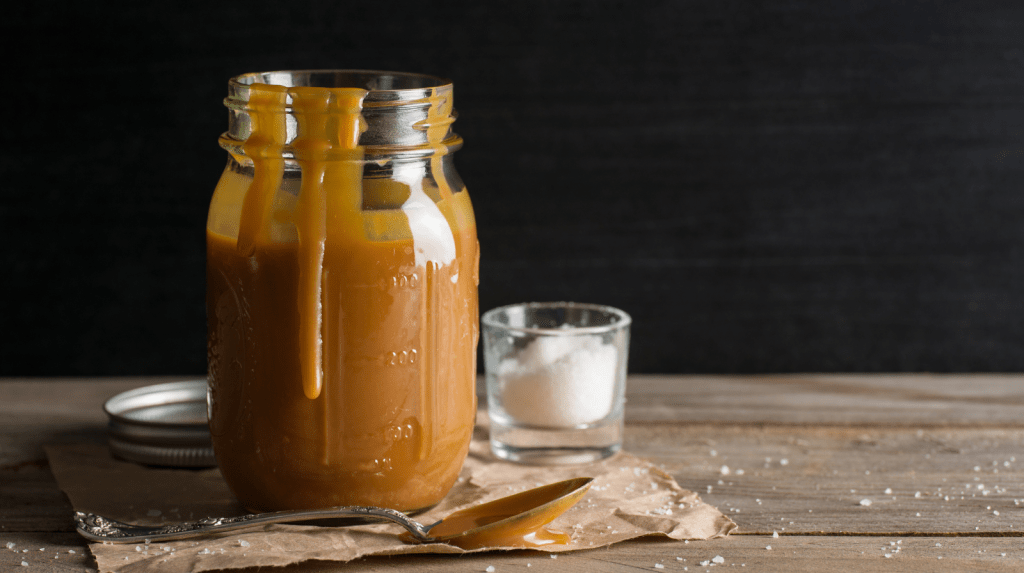
Vanilla Bean Caramel Sauce
Warm, classic, and flecked with real vanilla — a favorite for gifting.
👉 Find the Vanilla Bean Caramel Recipe ➜
👉 Pin the Vanilla Bean Caramel ➜

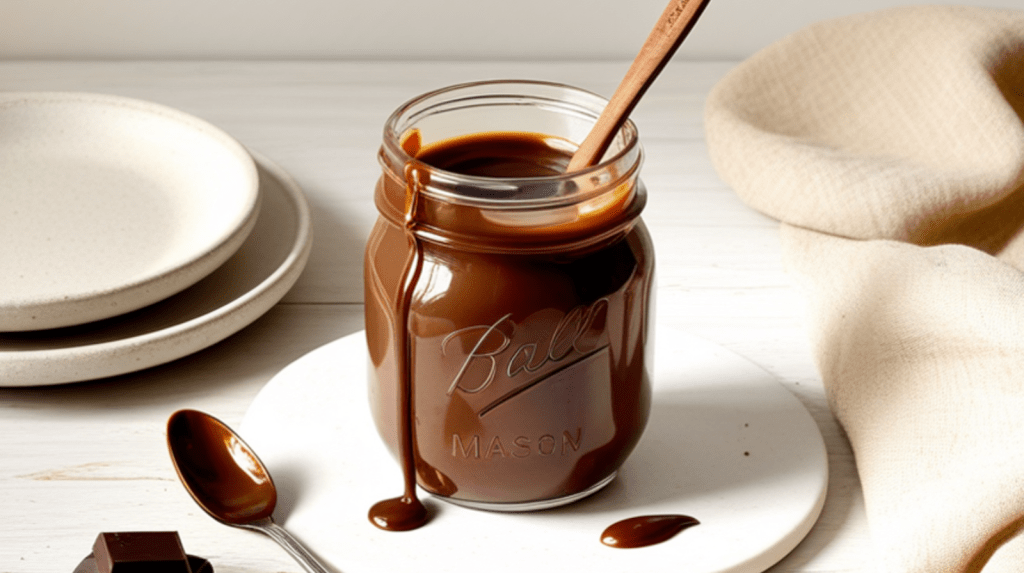
Chocolate Caramel Sauce
Rich, moody, and slightly bittersweet — our winter go-to.
👉 Find the Chocolate Caramel Recipe ➜
👉 Pin the Chocolate Caramel ➜

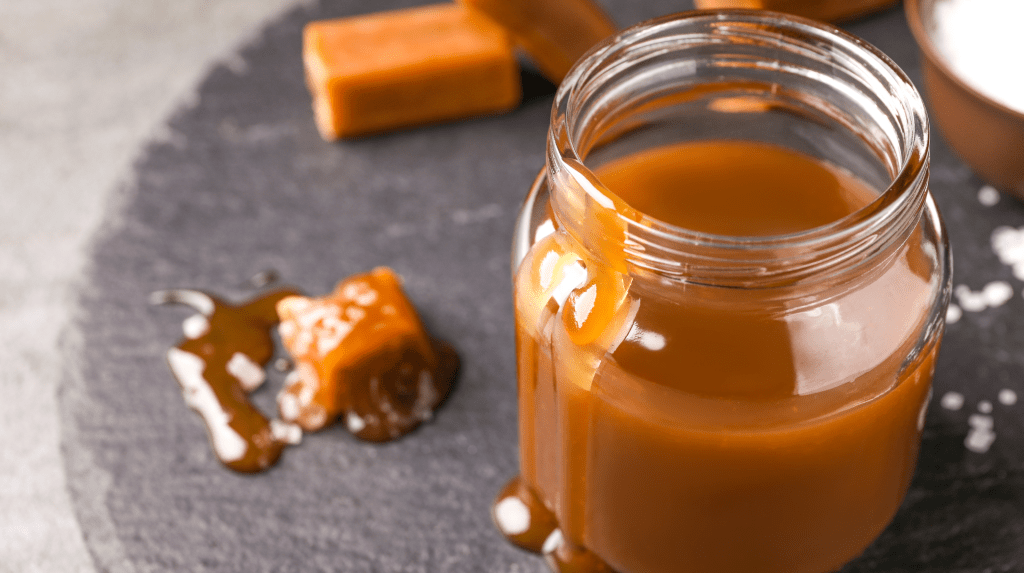
Butterscotch Sauce
The happy accident. Made with brown sugar and nostalgia.
👉 Find the Butterscotch Recipe ➜
👉 Pin the Butterscotch Sauce ➜

📝 Each of these recipes can be found in their own posts, each with a printable ½-page recipe card for easy gifting or kitchen reference.
🧂 Salted Caramel Recipe (Dry Method)
This is the recipe that started it all — a dry caramel, no water or thermometer needed. It’s quick, rich, and deeply flavored, with a touch of salt that makes everything sing.
🪄 Recipe Note:
This version is a half batch — it makes about 1 cup. It doubles beautifully but I often keep this smaller amount on hand. It fits our family’s pace: enough to enjoy, not enough to overindulge, and always within the freshness window.
Ingredients
1 cup granulated sugar
6 tbsp unsalted butter, cubed
½ cup heavy cream (room temperature)
½ tsp flaky sea salt (or to taste)
Directions
In a heavy-bottomed saucepan, heat sugar over medium-low heat. It will clump before it melts — keep stirring patiently.
Once the sugar is melted and amber-gold, remove from heat. Add butter. Whisk constantly as it bubbles and thickens; it may separate briefly.
Return to low heat for 30 seconds if needed, stirring until mostly smooth. Slowly pour in the cream. It will bubble dramatically — keep whisking.
Some clumps may form; that’s okay. They’ll melt back in or turn into tiny candy bits. Stir in salt.
Let cool 10–15 minutes before transferring to a jar.
Store refrigerated for up to two weeks. Rewarm gently before serving.
☕️ Ways We Use It
Over ice cream or brownies Drizzled on pancakes or waffles Swirled into morning coffee or chai Poured warm over baked apples Packaged as DIY holiday or teacher gifts

🎁 Gift Idea Guide: Packaging + Labeling
Homemade caramel makes a beautiful, heartfelt gift.
Jars: 4- or 8-oz glass jars with clamp lids or gold twist caps.
Labels: Kraft paper or linen-texture printable labels. Handwrite “Salted Caramel Sauce – Small-Batch Homemade.”
Decor: Tie a thin ribbon or twine around the lid. Add a cinnamon stick, rosemary sprig, or mini wooden spoon.
Tags: Print or hand-stamp gift tags with your submark. Include a “Refrigerate & Reheat Gently” note.
Bundles: Create a sampler — Salted, Vanilla Bean, and Chocolate — in a kraft box lined with a linen napkin.
⚖️ Kitchen Note
Dry caramel moves fast — keep your focus and your tools ready. Sugar melts unevenly at first, then suddenly turns liquid. That’s the moment it needs your attention.
Use a heavy saucepan, a heat-resistant whisk, and keep little helpers at a safe distance until the caramel is cooling. The bubbling can reach over 300°F, and even a small splash can burn.
A few clumps or bubbles are a good sign — they mean the caramel is alive, made by hand, and never factory perfect.
📝 Related Posts
🥤 Nourishing Vanilla Blueberry Milkshake (Postpartum & Anytime Energy)
🍫 Postpartum Desserts (That Everyone Will Steal a Bite Of) – coming soon
Caramel asks for attention. It’s not complicated, but it demands that you show up — that you watch, listen, and wait for the exact right shade of gold. I’ve learned that the process matters as much as the result.
Each time I make it, I’m reminded that small rituals like this can shape the rhythm of a home — the smell of butter and sugar, the laughter from the next room, the sound of the spoon scraping the pan. It’s ordinary and a little magical all at once.
✍️ Author’s Note
I’ve learned that recipes like this are less about precision and more about presence.
Some days, the sugar melts easily. Other days, it clumps and needs coaxing. Either way, you get there — a reminder that patience is a skill worth practicing, in the kitchen and in life.
Feeding people has always been one of the ways I love best. Maybe that’s why I never mind a few clumps in the pan — it’s proof that something real was made here.



 This Wilderness Our Home
Leave a comment