Where knowledge and compassion meet.
The early months of motherhood have always felt like a study in opposites — beautiful and brutal, instinctive and uncertain.
For me, what steadies isn’t people so much as knowledge. I like to understand things, to see the logic behind the chaos.
When my son was born in 2010, our local physician’s office hosted a free weekly group for new moms. It was led by a nurse practitioner and lactation consultant who somehow managed to combine science, patience, and humor in every session.

Those mornings became a touchpoint — not because I craved social connection (I didn’t) but because I needed reliable information. I wanted to know what was normal, what wasn’t, and how to tell the difference. Each week we’d weigh our babies, talk through sleep patterns, feeding struggles, and milestones that seemed to change daily.
The faces rotated. Sometimes I saw the same moms for weeks; other times someone would appear once and never return. My husband came often, especially with our first two being winter babies. He steadied me the most — catching details I missed or remembering something the nurse said that slipped my mind in the fog of new motherhood.
Those groups usually carried us through the first six months — the steepest learning curve, the endless questions, and the small but vital reassurance that we were doing okay.

🌿 Different Babies, Different Journeys
Each child’s nursing journey has been its own education.
My first nursed well but grew slowly; every weight check felt like a test I was quietly taking.
My second was sleepy and often left me battling mild mastitis — a repeating cycle of progress and setback that kept me on edge.
By the time my third baby arrived, I thought I should have this figured out. I knew how to nurse a baby. I’d done it before. But despite his constant attachment, he wasn’t gaining weight, and I felt awful. I wanted my life back. I wanted to nurse with ease again — to go about all the busy, happy things that fill our days.
This time, knowledge alone wasn’t enough. I needed help. I needed community.

🍼 The Triple-Feeding Season
Triple feeding is a rhythm that can wear you down even when you know it’s temporary. Each round blurs into the next — my body exhausted, my mind frayed.
For us, it started before we ever left the hospital.
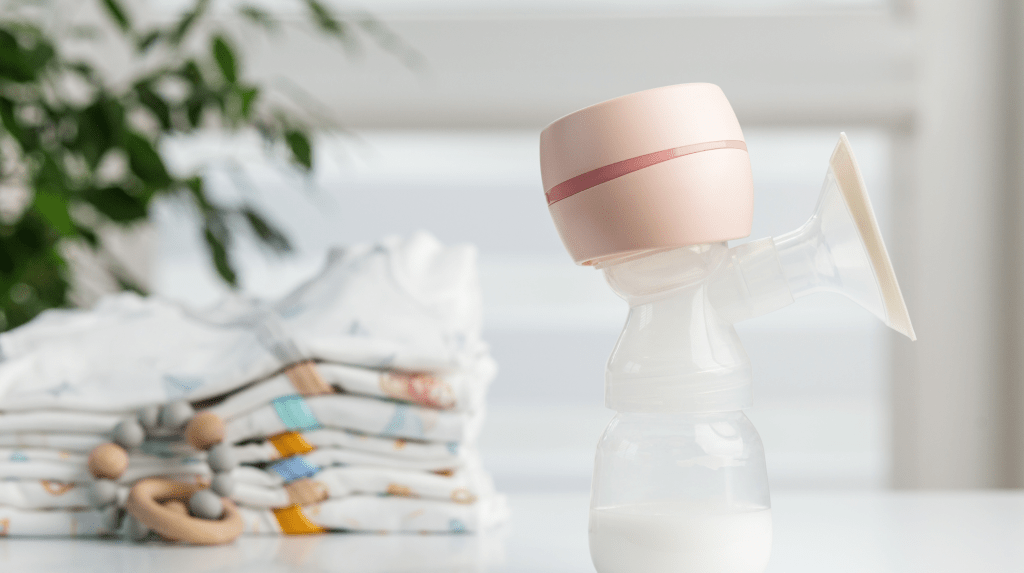
Because he needed time under the lights, we followed a strict schedule: nurse, pump, bottle, repeat — trying to make sure he got every drop I could give while I had him in my arms.
I had milk, plenty of it.
But he wasn’t efficiently removing it on his own, and while he made slow progress, he wasn’t gaining by leaps and bounds. Each feed felt like its own little marathon — effort layered with worry.
When we got home, the triple feeding continued. On paper, it made sense: a way to support my supply and give him what he needed. But emotionally, it wore on me.
He craved contact so deeply that every time I took him off to pump, he cried — and the sound of it broke me. I wanted to hold him close and still somehow do everything “right.”
I needed the comfort of him near — the quiet rhythm of nursing — even when I knew the routine was working against my rest.
Eventually, I supplemented to take some of the emotional weight off both of us.
It wasn’t defeat. It was adaptation — the choice that gave us space to breathe, recover, and remember that feeding is not a measure of love.
That’s where The Nest came in.
🕊 The Nest and the Turning Point
The Nest Family Resource in Northern California is a warm, welcoming space for parents seeking guidance. That’s where I met Katie DaMota, MAS, IBCLC — a lactation specialist and certified parenting coach with a master’s in Maternal & Child Nutrition and Lactation from UC Davis. She helped me steady myself again with both information and compassion — a calm confidence that said, “You can do this, and I’ll meet you where you are.”
In our initial consultation, we decided together to limit his nursing time so I could pump and meet his needs without sending either of us into distress. To keep him calm while I pumped, I supplemented at the same time — feeding him what I had ready so he didn’t cry through the transition.
Over time, I was able to get ahead of his needs: offering pumped milk while continuing to pump more. The tears stopped. The cycle softened. Formula became a tool in that season — a bridge that supported us both while he gained the strength to nurse more efficiently.
Katie reminded me that supplementing wasn’t failure; it was support. That balance was possible — and healthy — for both of us.
She also connected me with a pediatric physical therapist who specializes in infants and craniosacral therapy — someone who happened to be linked with my chiropractor who had supported me through pregnancy and beyond.
Together, that small web of professionals became the hands that lifted me out of the fog.
Katie’s guidance helped me trust that I wasn’t failing my baby. My milk wasn’t failing him. We were simply learning each other in a new way.
The Nest helped me make peace with that season.
It marked the shift from exhaustion to understanding — and from guilt to grace.

🌲 Community, Reimagined
Our Northern California community has grown and changed over the years, but places like The Nest keep its heart intact. They remind us that connection can be both scientific and soulful — where clinical understanding meets real compassion.
I used to think I didn’t need community, that knowledge would be enough. But now I know they aren’t opposites. They’re partners.
Information opens the door; community walks you through it.
🧾 Printable: My Support + Knowledge Tracker
For moms who learn best by keeping notes and connections in one place.
Use it to track what helps you feel steady — advice, medical notes, resources, or small reminders of progress.
My support & Knowledge Tracker
⸻
🔗 Related Posts

When the Fourth Trimester Ends

Postpartum Body Recovery: What No One Tells You (coming soon)
Grace doesn’t always show up as calm mornings or easy nursing sessions.
Sometimes it arrives as a stranger’s kindness, a referral scribbled on a sticky note, or a quiet voice saying, “You’re doing everything you can, and small progress counts — even when you don’t feel it.”
We can’t always make it easy — but we can make it lighter, together.

🩺 Real Talk: On Growth Charts, Comparison & Grace (Refined)
Everyone seems to want a cute, chubby baby — because that’s what we’re told healthy babies are supposed to look like. But not every baby grows that way. For the rest of us — the ones whose babies don’t even make the chart — it can feel heartbreaking.
I can go back to myself. I didn’t hit the growth chart either. I was labeled “failure to thrive.” None of my babies have ever stayed on the chart for long, if at all. They’ve all grown on their own timelines — small but strong, healthy, and meeting milestones early — just not in the way the numbers expect.
When my baby’s weight gain was slow, I stayed in close contact with our pediatrician and worked with a certified lactation consultant. Small adjustments helped, and sometimes supplementation did, too.
For us, that looked like triple feeding: nursing, pumping, and bottle feeding. If I had pumped milk, we used it. If I didn’t, we used formula without guilt. He gained steadily — on his curve, in his time.
Every baby grows differently. The chart is a tool, not a verdict.
Small progress counts.
Your effort counts.
And none of it says a single thing about your worth as a mother.
⚖️ Disclaimer:
I’m not a medical professional. The information shared here is based on my personal experience as a mother and informed by reputable sources such as the American Academy of Pediatrics (AAP) and CDC infant feeding guidelines. This content is for general informational purposes only and should not replace personalized advice from your healthcare provider. Always consult your pediatrician, lactation consultant, or qualified medical professional regarding your child’s health or growth.

✍️ Author’s Note
Every story I share here comes from a real place — the quiet moments, the hard seasons, and the lessons I had to learn the long way. My hope is that something in these words helps you feel a little less alone in your own journey. We’re all figuring it out in real time, doing the best we can with the knowledge and support available to us.
If this chapter of motherhood is heavy for you right now, I’m sending you the kind of grace I wish I had given myself sooner.



 This Wilderness Our Home
Leave a comment