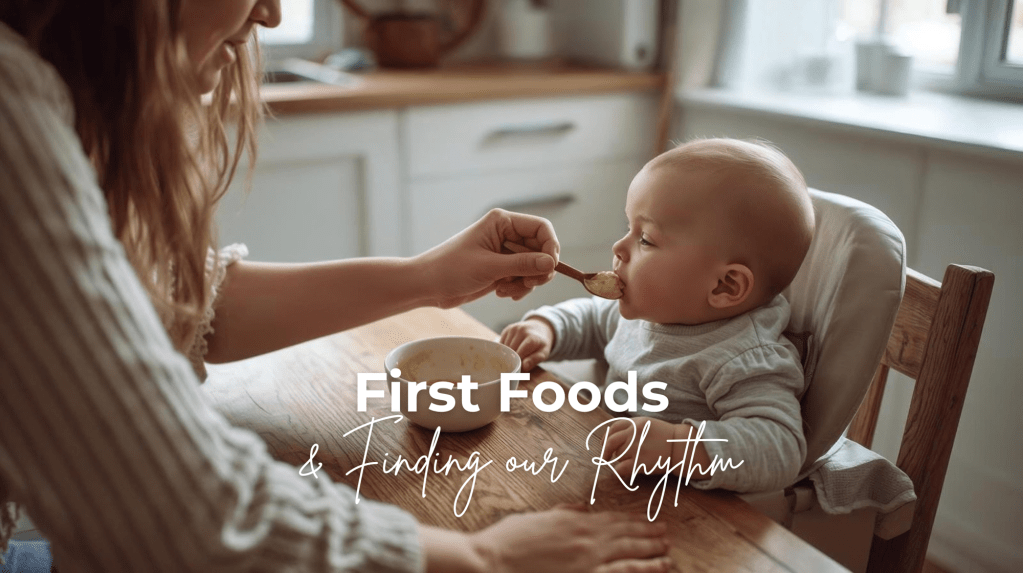
The gentle transition from milk to meals — one taste at a time
Part 4 of the Newborn Seasons series — how we approached first foods slowly, intentionally, and without pressure.
Previous: What’s Actually Changed (and What Hasn’t) →
The first bite always feels bigger than it is.
By the time each of my babies reached the point where solids were on the horizon, milk was still doing the heavy lifting. Feeding had a rhythm. We knew each other. Introducing food wasn’t about replacing milk — it was about adding something new to the conversation.
With our first two, we didn’t start solids until around six months. That timing felt right for us — not because of a rule, but because of readiness. Sitting with support, bringing hands to mouth with some intention, showing interest without frustration. I’ve never rushed that moment. It arrives when it arrives.
🥣 Our Starting Place
Our first foods were simple and familiar.
With our oldest, it was banana, mashed and mixed with breast milk.
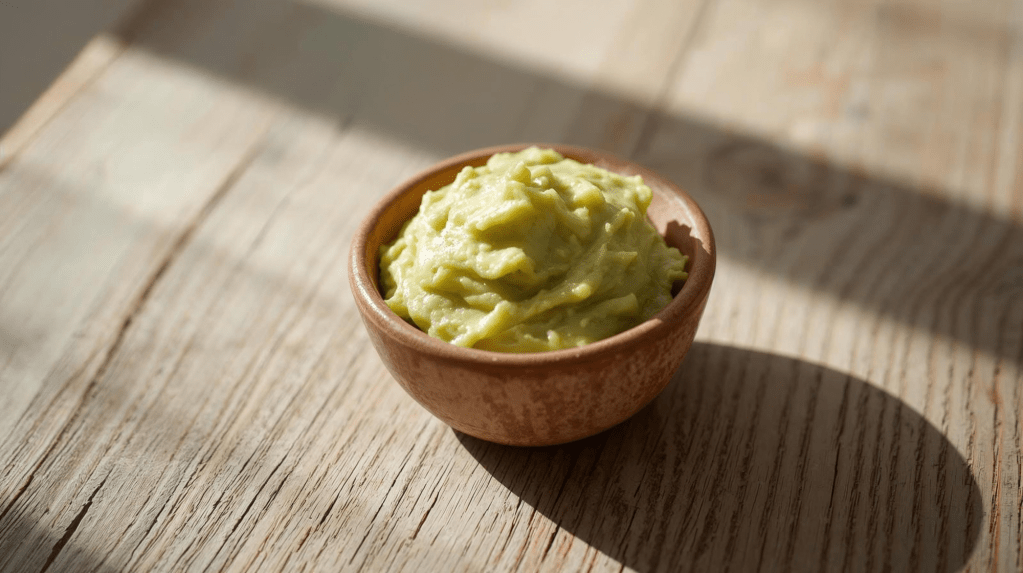
With our second, it was avocado, again mixed with breast milk — something familiar paired with something new. We jokingly called it mama mole, and the name stuck long after the bowl was gone.
A Note on Avocado
Avocado is often recommended as a first food, and for many babies it works well. It’s soft, easy to mash, and nutrient-dense — which is why it was one of our early foods with our older children.
This time, it didn’t agree. After a few attempts, it was clear it wasn’t being tolerated, so we paused and moved on.
Avocado is high in fat, and while that can be a benefit for some babies, others may be more sensitive to it early on. That doesn’t make it a poor food — just not the right starting place for every baby.
For now, we’re beginning with applesauce — gently steamed apples blended smooth — and letting the rhythm build from there.
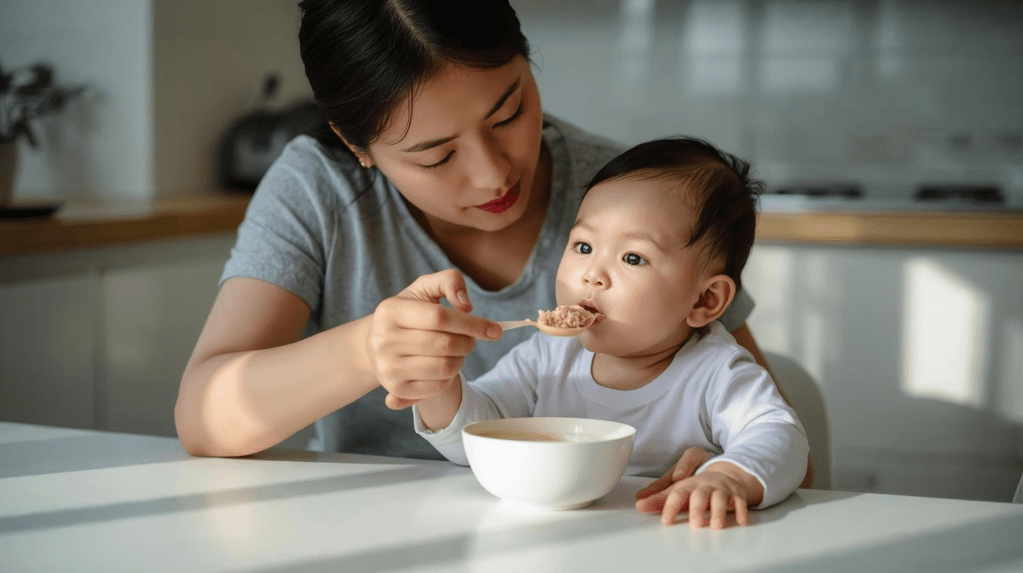
At the beginning, foods were introduced one at a time and served on their own — not alongside anything else. We stayed with one food for about a week, then paused before introducing another single food. That space mattered to me. It allowed each taste to stand alone and gave little systems time to adjust.
Only later — after familiarity was established — did we reintroduce earlier foods alongside newer ones. That progression felt calm and intentional.
I never liked mixing foods early on. I wanted my babies to taste what they were tasting — not have one flavor disappear behind another.
🧡 How We Prepared Food
I cooked everything myself.
Back in 2010, I had a Beaba Babycook, and I genuinely loved it. It earned its place in our kitchen and was used well beyond purées — applesauce, soft vegetables, and small-batch prep for later cooking.
That said, I haven’t purchased another one yet. And honestly, you don’t need a specialized gadget to do this well.
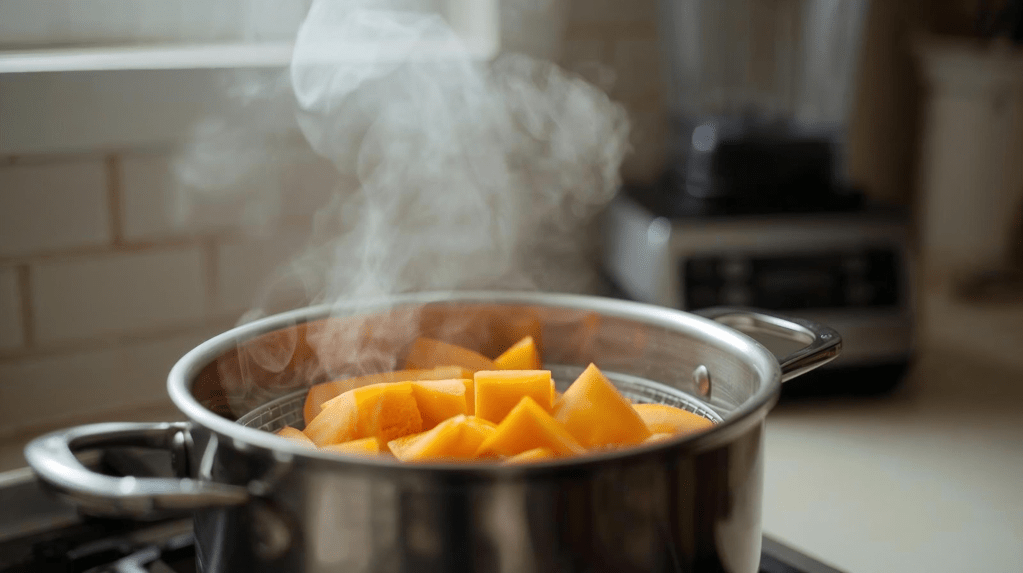
A good pot, a simple steamer basket, and either a blender or food processor can accomplish the same thing. It’s a little slower, but it creates a steady, reliable rhythm — especially if you already have those tools and don’t want another appliance taking up space.
🌿 What We Offered (and When)
Our progression stayed fairly consistent with our first two babies.
Early foods focused on simple fruits and vegetables — soft, familiar, and easy to prepare.
Sweet potatoes and butternut squash were early favorites — comforting, naturally sweet, and easy to adjust in texture. Both were enjoyed plain and sometimes with a little cinnamon.
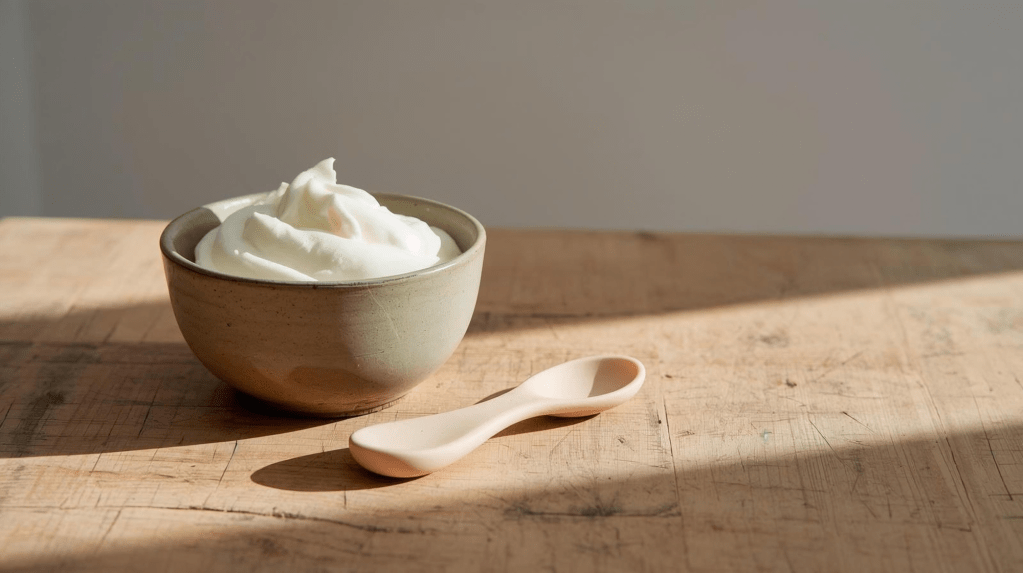
Plain, full-fat yogurt came in relatively early as well — an easy texture and a gentle way to introduce cultured dairy.
Eggs were introduced later — after several fruits and vegetables had been well tolerated — but before beans. Prepared simply and offered on their own, they fit naturally into the next phase of exploration.
Beans came after that, once textures were better tolerated and interest had grown.
We waited on meat intentionally. Both of our older kids were well over a year old, had teeth, and were clearly interested before we introduced it.
There were also a few foods we waited on until after a year — honey, strawberries, citrus, and blueberries — mostly for safety and sensitivity rather than nutrition.
A Simple First Foods Progression
For parents who appreciate a loose sense of order, here’s one way early foods can unfold — moving from very gentle introductions toward more texture and variety as readiness grows.
A Possible First 15 Foods (In a Gentle Progression):
- Applesauce (cooked, smooth)
- Butternut squash
- Banana (very ripe, mashed)
- Sweet potato
- Pears (cooked)
- Zucchini (steamed, puréed)
- Egg (well-cooked, small amounts)
- Pumpkin
- Carrots (well-cooked, puréed)
- Yogurt (introduced later, often paired with an already accepted fruit or lightly flavored)
- Cottage cheese (when texture and chewing skills allow)
- Avocado (as tolerated)
- Oatmeal (well-cooked, smooth — if using grains)
- Broccoli (very soft, mashed or puréed)
- Peas (introduced later, once babies are self-feeding — frozen peas worked well for us at that stage)
This isn’t a checklist — just one possible progression. Some babies move quickly, others need more time. It’s always okay to pause, skip a food, or come back to it later.
🤲 A Mixed Approach
We leaned gently traditional at first — spoon-fed purées while our babies learned what eating was.
As readiness grew, we layered in more independence. Tools like self-feeders (we used mesh-style feeders with our older two and now appreciate newer designs like Moss & Fawn) allowed babies to mash thicker, soft foods safely and participate more actively. No affiliation — just a design I like.
It was never one method or another. It was watching our babies and responding.
Food wasn’t something to master. It was something to discover.
A Note on Iron and Zinc
As solids begin, nutrients like iron and zinc often come up in feeding conversations. These minerals support growth and development, but how and when they’re emphasized can vary based on feeding method, family history, and individual needs.
Within our early foods, egg was the most meaningful source of iron and zinc. Foods like oatmeal can contribute smaller amounts, while vegetables and fruits offer supportive nutrients and help with overall tolerance and digestion. Dairy foods such as yogurt and cottage cheese were included for fat, protein, and texture — not for iron.
Guidelines offer a starting place, not a prescription. Genetics, growth patterns, and how a baby responds all matter. Our focus has always been on introducing foods slowly, watching tolerance, and adjusting as needed, rather than trying to meet a specific nutrient target through any one food.
🧠 What Stayed True
Across three babies, some things never changed:
Food is an invitation, not a requirement. Progress doesn’t look the same from one child to the next. Mess is learning. Interest comes and goes — and comes back again.
Most of all, meals were never about how much was eaten. They were about sitting together, offering, observing, and letting curiosity lead.
Milk still mattered. Food was simply joining the rhythm.
Author’s Note
First foods don’t need to be perfect or impressive. They just need to be honest — one taste at a time. Feeding has always been less about milestones and more about relationship, and that doesn’t change when the spoon appears.


 This Wilderness Our Home
Leave a comment